

What Every Seller In San Antonio Needs To Know! San Antonio has always been a city where people depend on their vehicles. Whether you're commuting across town, heading to work on one of the military bases, traveling throughout Bexar County, or taking weekend trips across Texas, your car is part of your daily routine. Eventually,...
Read More
Sell Us Your Car! Being upside down on a car loan is one of the fastest ways to turn a perfectly good vehicle into a financial burden. It happens when the amount you owe is greater than what your vehicle is worth, leaving you stuck between a lender demanding full payment and a market that...
Read More
Luxury, Reliability, And Value Deserve The Right Buyer Lexus Owners Usually Take Better Care Of Their Vehicles There is a reason Lexus has built one of the strongest reputations in the automotive industry. Owners don't simply buy a Lexus because it looks good in the driveway—they buy one because they expect it to deliver years...
Read More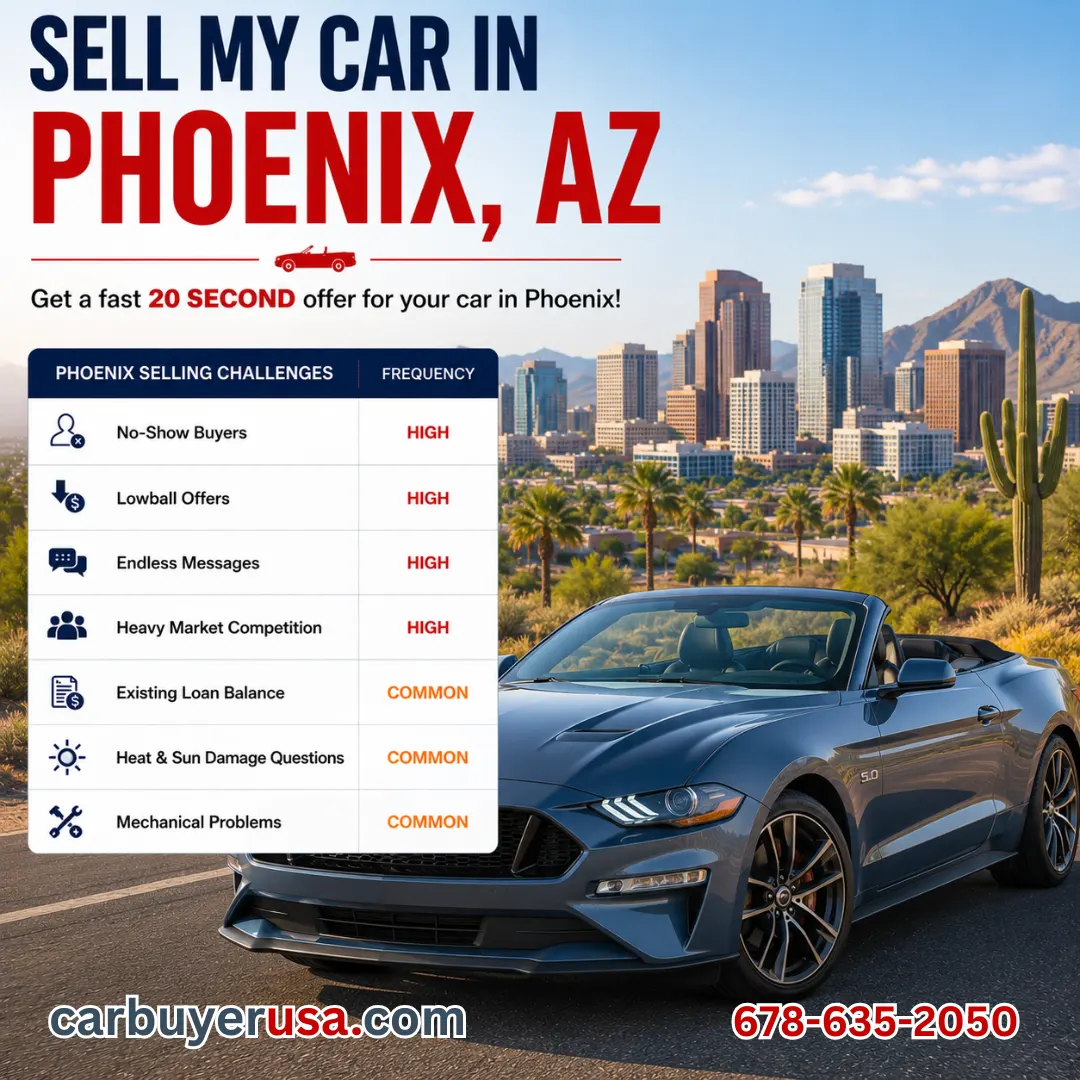
What Every Seller In Phoenix Needs To Know! Phoenix is one of America's fastest-growing cities, and with that growth comes an enormous used vehicle market. Every day, thousands of vehicles are listed for sale throughout the Valley, giving buyers more choices than ever before. While that sounds promising for sellers, it also creates one unavoidable...
Read More
The Real Question Is...Who Pays The Most For Audis? Audi Owners Usually Want A Smarter Selling Process Audi has built its reputation around clean design, advanced technology, strong performance, and that unmistakable blend of luxury and everyday usability. Whether someone owns an A4, A6, A7, Q5, Q7, Q8, S4, SQ5, RS5, RS7, e-tron, or another...
Read More
What Every Texan Needs To Know! Houston drivers know one thing better than almost anyone else: a vehicle isn't a luxury here—it's a necessity. With sprawling neighborhoods, long commutes, busy freeways, and one of the nation's largest metropolitan areas, dependable transportation is simply part of everyday life. Ironically, that doesn't make selling a vehicle any...
Read More
Finding The Right Buyer Is More Valuable Than Finding More Buyers Bentley Ownership Is Exclusive—So Is The Buyer Pool There is something unmistakable about a Bentley. Long before someone notices the handcrafted interior, twin-turbocharged engine, or iconic Flying "B" hood ornament, they recognize that this is not an ordinary automobile. Bentley has spent generations building...
Read More
The Ugly Truth About Electric Vehicles Most consumers purchase an electric vehicle expecting a simpler ownership experience. The promise is appealing: fewer moving parts, reduced maintenance, freedom from gas stations, and a vehicle packed with cutting-edge technology. What most buyers do not expect is discovering that some vehicles have been subject to recall notices advising...
Read More
Because Owing Money On A Vehicle Doesn't Make It Unsellable One of the most expensive mistakes vehicle owners make is believing they cannot sell a car because there is still a loan attached to it. That misconception keeps people trapped in vehicles they no longer want, no longer need, and sometimes can no longer comfortably...
Read More
What All Chicagoans Need To Know Selling a vehicle in Chicago sounds simple until you actually start trying to sell it. The city is filled with drivers. The roads are busy. Vehicles are constantly being bought and sold. On the surface, it seems like finding a buyer should be easy. Then the messages start arriving...one...
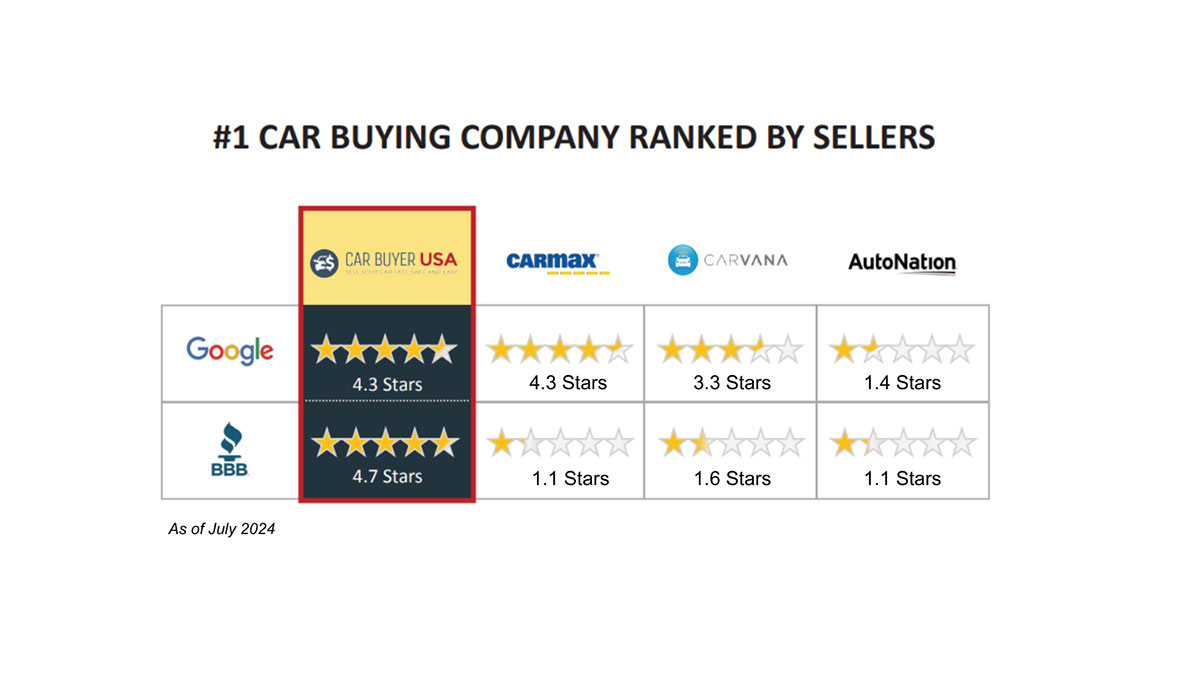
Read MoreCarBuyerUSA's Ratings VS The Big Guys

How It Works
We pay cash for cars, trucks, & SUVs, in any condition, anywhere in the Continental USA.
1
Get an Instant Cash Offer
Enter the Year, Make, Model, Trim Level & Miles (No VIN Required) and your cash offer appears onscreen (94% of the time)
2 Accept your offer
CarBuyerUSA offers are Cash Market Value.
Funds are guaranteed and paid at the time of pickup or drop-off
3Talk to an Agent
Your CarBuyerUSA representative schedules a no obligation inspection. In most markets an on-site mobile inspection can be arranged. The digital purchase agreement takes less than 60 seconds to complete.
4 Get Paid
When CarBuyerUSA picks up your truck, you are paid on the spot in full with guaranteed funds – entire process is hassle free.
Inspection, title work & pick up are all FREE.